Heli

Annapurna Base Camp with Helicopter Return

Premium guided trek · Local experts · Clean trails

13 Days 4,130 m Moderate Mar–May, Sep–Nov 2–12 people

Highlights of Annapurna Base Camp with Helicopter Return

Full Annapurna Base Camp (4,130 m) experience

Scenic helicopter return over the Sanctuary

Poon Hill sunrise included

Reduced descent strain and time on trail

Premium support with weather contingency planning

Overview of Annapurna Base Camp with Helicopter Return

The Annapurna Base Camp with Helicopter Return Trek combines a classic Himalayan trekking experience with a scenic helicopter flight back from the Annapurna region. This itinerary allows trekkers to walk through the diverse landscapes of the Annapurna Conservation Area, experience traditional mountain villages, and reach Annapurna Base Camp (ABC) at approximately 4,130 meters before returning by helicopter.

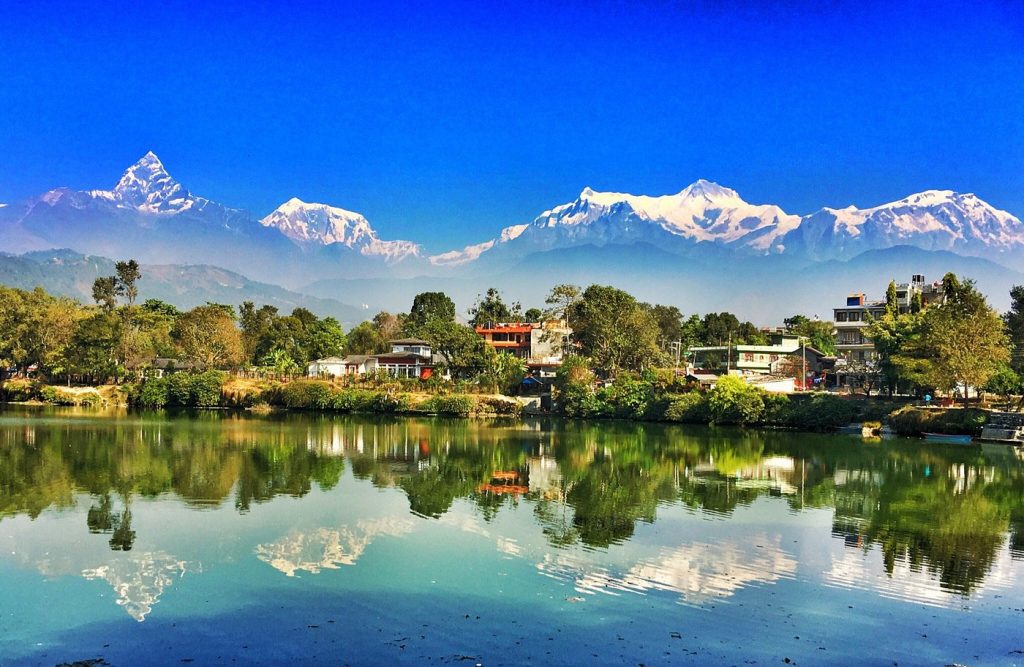
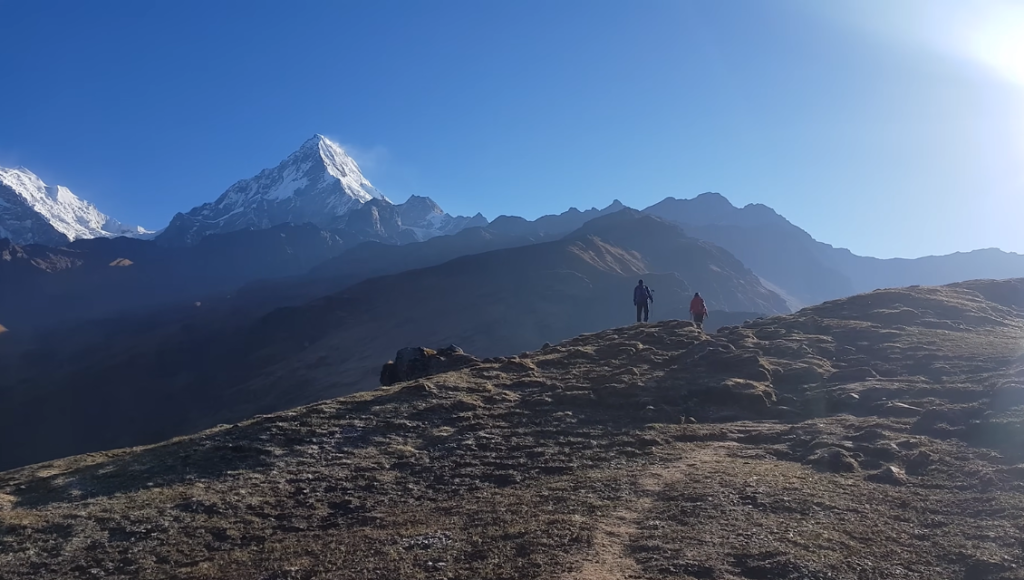
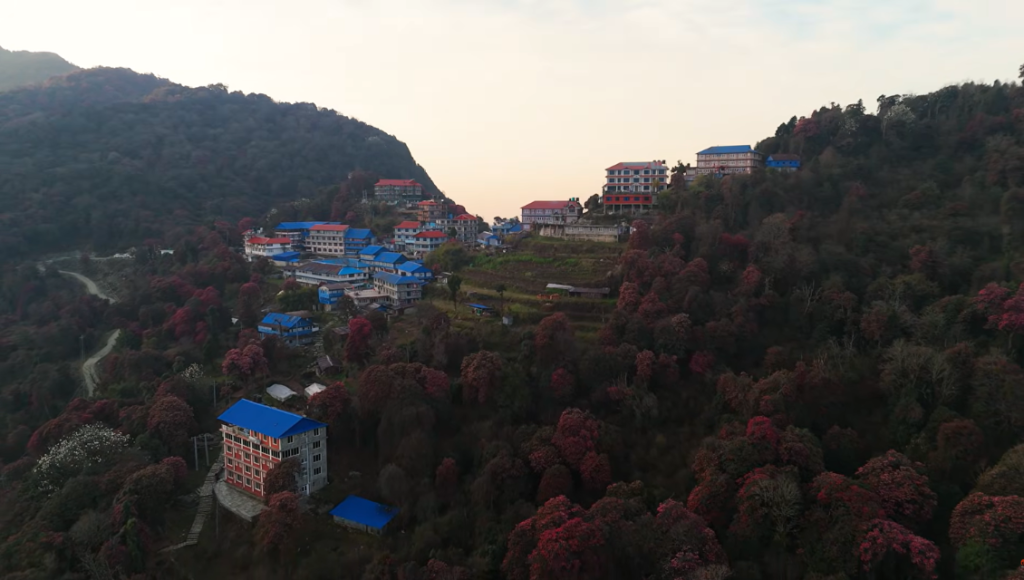
The journey typically begins from Pokhara and follows scenic trails through lush forests, terraced hillsides, rhododendron forests, and traditional Gurung villages. As the trail gains altitude, the landscape changes from subtropical vegetation to alpine terrain, with increasingly dramatic views of Annapurna South, Machhapuchhre (Fishtail), Hiunchuli, Annapurna I, Annapurna III, and surrounding Himalayan peaks.

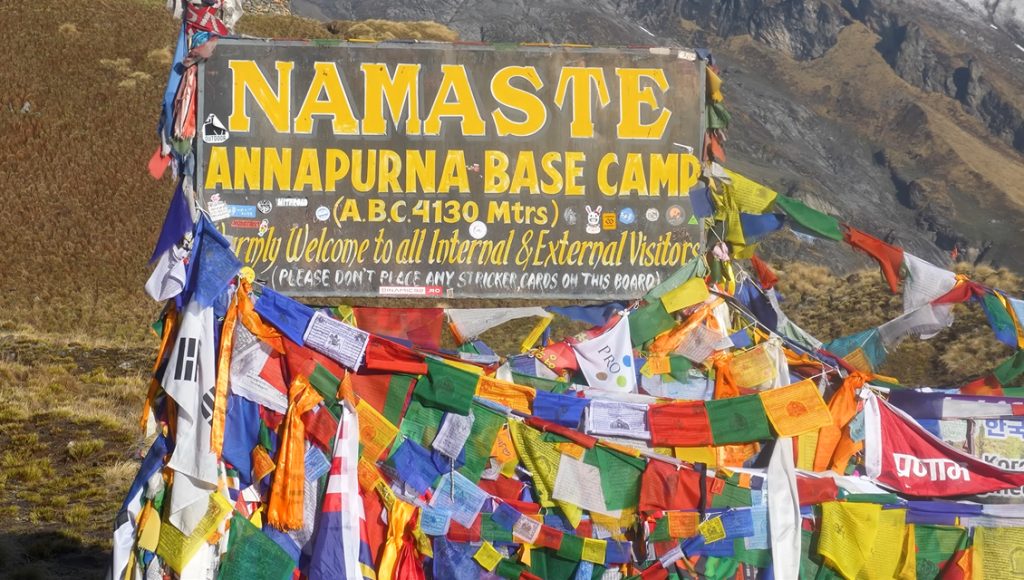
The highlight of the trek is reaching Annapurna Base Camp, a spectacular natural amphitheater surrounded by towering Himalayan mountains. Trekkers can enjoy sunrise and sunset views over the Annapurna Sanctuary before beginning the return journey.

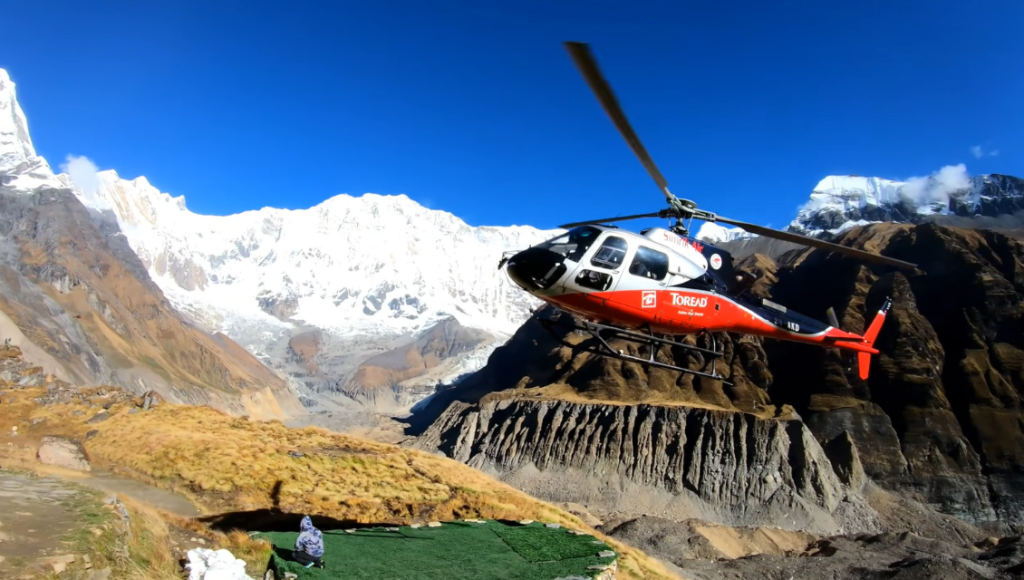
Instead of retracing the entire trekking route, the helicopter return from Annapurna Base Camp or the designated helicopter landing area provides a faster and memorable way to return toward Pokhara, subject to weather, visibility, aviation regulations, and landing conditions.

This combination of trekking and helicopter travel is suitable for travelers who want to experience the Annapurna Base Camp Trek while reducing the amount of walking required on the return journey.

Detailed Itinerary of Annapurna Base Camp with Helicopter Return

Day 1

Arrival in Kathmandu (1,400 m)

Airport welcome and transfer to your hotel. Evening briefing covering both the trekking route into the Annapurna Sanctuary and helicopter procedures, weight limits and weather protocols. Overnight Kathmandu.

Arrival in Kathmandu (1,400 m)
Accommodation Hotel in Kathmandu
Meals Dinner
Max Altitude 1,400 m
Distance Airport transfer
Day 2

Drive or fly to Pokhara (820 m)

Travel to Pokhara and settle into your hotel. Detailed briefing on trek and heli logistics. Overnight hotel.

Drive or fly to Pokhara (820 m)
Accommodation Hotel in Pokhara
Meals Breakfast, Lunch, Dinner
Max Altitude 820 m
Distance —
Day 3

Drive to Nayapul and trek to Tikhedhunga (1,540 m)

Drive to the trailhead and begin the classic Annapurna Base Camp approach through Birethanti and riverside villages to Tikhedhunga, building rhythm for the days ahead. Overnight teahouse.

Drive to Nayapul and trek to Tikhedhunga (1,540 m)
Accommodation Teahouse
Meals Breakfast, Lunch, Dinner
Max Altitude 1,540 m
Distance 4–5 hrs
Day 4

Trek to Ghorepani (2,860 m)

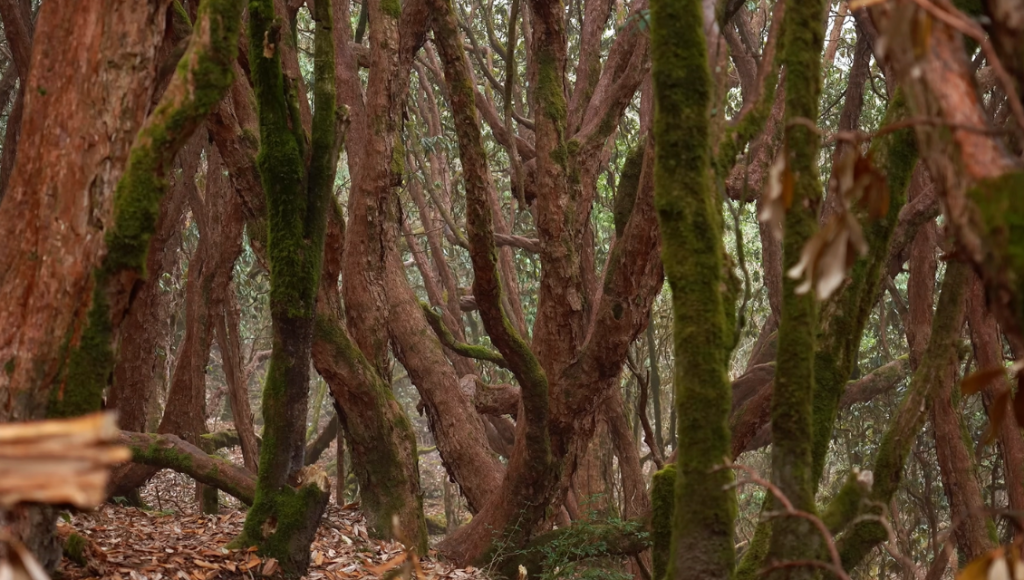
Climb the Ulleri staircase and continue through rhododendron forest to Ghorepani, staging point for the Poon Hill sunrise that enriches this heli-return itinerary. Overnight teahouse.

Trek to Ghorepani (2,860 m)
Accommodation Teahouse
Meals Breakfast, Lunch, Dinner
Max Altitude 2,860 m
Distance 5–6 hrs
Day 5

Poon Hill (3,210 m) and trek to Tadapani

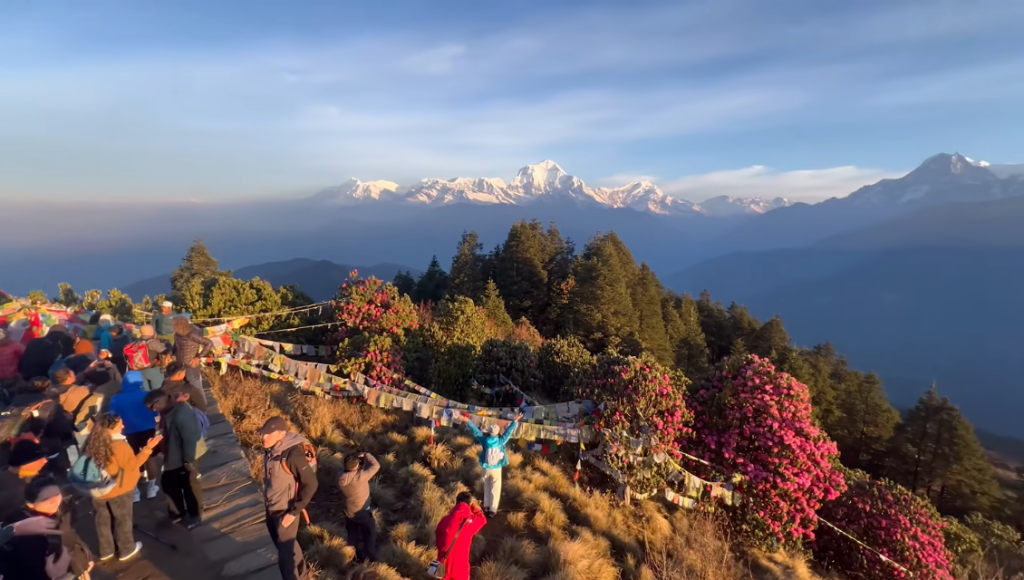
Pre-dawn hike to Poon Hill for sunrise over the Annapurna and Dhaulagiri ranges, then continue through forested ridges to Tadapani toward the Sanctuary corridor. Overnight teahouse.

Poon Hill (3,210 m) and trek to Tadapani
Accommodation Teahouse
Meals Breakfast, Lunch, Dinner
Max Altitude 3,210 m
Distance 6–7 hrs
Day 6

Trek into the Sanctuary approach (Chhomrong area)

Descend and re-ascend through Gurung country into the Modi Khola system, positioning for the higher alpine days that lead to Annapurna Base Camp. Overnight teahouse.

Trek into the Sanctuary approach (Chhomrong area)
Accommodation Teahouse
Meals Breakfast, Lunch, Dinner
Max Altitude 2,170 m+
Distance 5–6 hrs
Day 7

Trek to higher camps (Bamboo / Himalaya / Deurali)

Progress deeper into the gorge and alpine zone. Vegetation thins and the mountain walls close in as you near Machhapuchhre Base Camp and the Sanctuary entrance. Overnight teahouse.

Trek to higher camps (Bamboo / Himalaya / Deurali)
Accommodation Teahouse
Meals Breakfast, Lunch, Dinner
Max Altitude 3,200 m+
Distance 5–6 hrs
Day 8

Trek to Annapurna Base Camp (4,130 m)

Enter the Annapurna Sanctuary and reach Base Camp at 4,130 m. Spend the afternoon and evening surrounded by Annapurna I, Machhapuchhre and the great amphitheatre walls — the emotional climax of the trek before tomorrow's helicopter departure. Overnight teahouse.

Trek to Annapurna Base Camp (4,130 m)
Accommodation Teahouse
Meals Breakfast, Lunch, Dinner
Max Altitude 4,130 m
Distance 5–6 hrs
Day 9

Sunrise at ABC and helicopter to Pokhara

Enjoy sunrise in the Sanctuary, then board the helicopter for a spectacular flight over glaciers, ridges and deep valleys back to Pokhara (approximately 20–25 minutes, weather permitting). Transfer to your hotel for a celebratory evening. Overnight hotel.

Sunrise at ABC and helicopter to Pokhara
Accommodation Hotel in Pokhara
Meals Breakfast
Max Altitude 820 m
Distance Heli ~20–25 min
Day 10

Buffer day in Pokhara

Weather contingency day. If the helicopter operated on schedule, enjoy a free day by the lake. If delayed, this day absorbs the wait or alternative descent plan. Overnight hotel.

Buffer day in Pokhara
Accommodation Hotel in Pokhara
Meals Breakfast
Max Altitude 820 m
Distance —
Day 11

Return to Kathmandu (1,400 m)

Fly or drive to Kathmandu. Overnight hotel.

Return to Kathmandu (1,400 m)
Accommodation Hotel in Kathmandu
Meals Breakfast
Max Altitude 1,400 m
Distance —
Day 12

Final departure

Airport transfer. End of ABC Helicopter Return trek services.

Accommodation —
Meals Breakfast
Max Altitude 1,400 m
Distance Airport transfer

What’s Included / Excluded

Includes

  • Airport pickup and drop-off in Kathmandu, if mentioned in the itinerary
  • Tourist bus or private transportation between Kathmandu and Pokhara
  • Transportation between Pokhara and the trek starting and ending points
  • Experienced, English-speaking trekking guide
  • Porter service

Excludes

  • ✕ International airfare
  • ✕ Nepal entry visa fee
  • ✕ Personal travel and trekking insurance
  • ✕ Medical treatment and emergency helicopter evacuation
  • ✕ Personal trekking equipment and clothing

Additional Information of Annapurna Base Camp with Helicopter Return

Best Time for Annapurna Base Camp with Helicopter Return

The best seasons for the Annapurna Base Camp Trek with Helicopter Return are generally spring (March to May) and autumn (September to November). These periods typically offer favorable trekking conditions, clearer mountain views, and comfortable daytime temperatures.

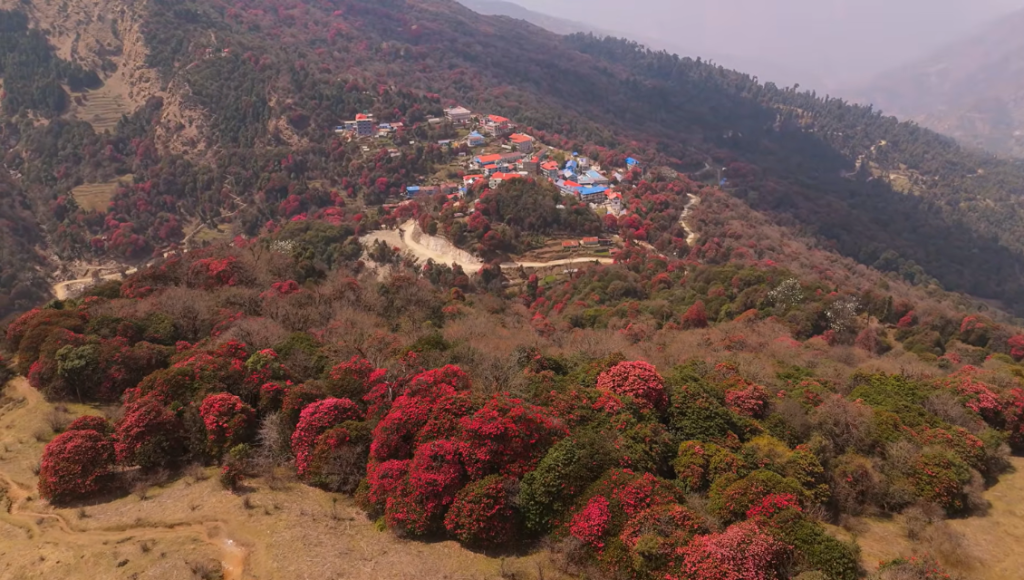
Spring is particularly attractive because rhododendron forests along the trail are often in bloom. Autumn generally provides clear mountain visibility following the monsoon season.

Winter trekking is possible but can involve snow and freezing temperatures at higher elevations. The monsoon season can bring heavy rainfall, muddy trails, landslides, and reduced visibility.

Annapurna Base Camp Trek Difficulty

The Annapurna Base Camp Trek with Helicopter Return is generally considered a moderate trek. The route includes regular ascents and descents, stone steps, uneven mountain trails, and several hours of walking per day.

The helicopter return reduces the amount of walking required on the descent but does not eliminate the physical demands of reaching Annapurna Base Camp. Good physical fitness and preparation are recommended.

Annapurna Base Camp Altitude

Annapurna Base Camp is located at approximately 4,130 meters above sea level. The gradual increase in elevation makes proper pacing and acclimatization important.

Trekkers should stay hydrated, maintain a comfortable walking pace, eat regular meals, and communicate with their guide if they experience symptoms associated with altitude.

Helicopter Return from Annapurna Base Camp

The helicopter return is one of the major features of this itinerary. After completing the trek to the Annapurna Sanctuary and Base Camp, trekkers can return by helicopter instead of walking the entire route back.

Helicopter operations depend on weather, visibility, landing conditions, aviation regulations, and operational availability. The exact pickup location may also change according to local conditions and aviation requirements.

Weather and Helicopter Operations

Mountain weather can change rapidly. Helicopter flights are particularly dependent on visibility, cloud conditions, wind, and other operational factors. A scheduled helicopter return should therefore be considered subject to safe flying conditions.

Travelers should maintain some flexibility in their itinerary in case the helicopter cannot operate at the originally planned time.

Accommodation During the Trek

Accommodation is generally provided in local teahouses and mountain lodges along the trekking route. Rooms are usually basic and commonly arranged on a twin-sharing basis.

Facilities become simpler at higher elevations. Hot showers, Wi-Fi, charging facilities, and other services may be limited or available for an additional fee.

Food and Meals

Teahouses provide a selection of Nepali and international-style meals. Common options include:

  • Dal bhat
  • Rice and curry
  • Noodles
  • Soups
  • Pasta
  • Potatoes
  • Vegetables
  • Eggs
  • Bread
  • Tibetan-style dishes

Trekkers can also carry energy bars, nuts, chocolate, and other lightweight snacks for additional energy during long walking days.

Permits

The trek generally requires the Annapurna Conservation Area Permit (ACAP) and applicable TIMS or trekking registration requirements. Requirements can change, so current regulations should be confirmed before departure.

If you are traveling with a trekking agency, the required permits are normally arranged as part of the package.

Travel Insurance

Travel insurance is strongly recommended for the Annapurna Base Camp with Helicopter Return Trek. Your policy should cover trekking at the maximum altitude reached on the itinerary, medical treatment, and emergency helicopter evacuation where applicable.

Check your insurance policy carefully before departure to understand its altitude limits and exclusions.

Responsible Trekking

The Annapurna region is a protected mountain environment. Trekkers should follow Leave No Trace principles, avoid unnecessary plastic waste, use designated trails, dispose of rubbish properly, and respect local communities and cultural traditions.

Supporting local teahouses, guides, porters, and community businesses also contributes to the mountain communities along the route.

Altitude Safety

Although the helicopter return shortens the descent, trekkers still reach approximately 4,130 meters at Annapurna Base Camp. Altitude awareness is therefore important.

Possible altitude-related symptoms can include headache, dizziness, nausea, unusual fatigue, and shortness of breath. Symptoms that become severe or worsen should not be ignored. Descending to a lower elevation and seeking medical assistance may be necessary.

Who Is This Trek Suitable For?

The Annapurna Base Camp with Helicopter Return is suitable for travelers who want to experience the classic Annapurna Base Camp trekking route but prefer to avoid the full return trek.

It can be particularly useful for travelers with limited time who want to combine Himalayan trekking and helicopter travel within one itinerary.

What to Bring for Annapurna Base Camp with Helicopter Return

  • Comfortable, waterproof trekking boots with good ankle support
  • Lightweight trekking trousers
  • Quick-drying trekking shirts
  • Thermal base layers
  • Warm fleece or mid-layer jacket
  • Warm down or insulated jacket
  • Waterproof and windproof jacket
  • Waterproof trekking trousers
  • Warm hat and sun hat
  • Warm gloves
  • Comfortable trekking socks
  • UV-protection sunglasses
  • High-SPF sunscreen and lip balm
  • Comfortable daypack with rain cover
  • Reusable water bottle or hydration bladder
  • Water purification tablets or portable water filter
  • Adjustable trekking poles
  • Headlamp with spare batteries
  • Warm sleeping bag suitable for cold conditions
  • Personal first-aid kit and medications
  • Personal toiletries and quick-drying towel
  • Power bank and charging cables
  • Camera or smartphone
  • Passport and required trekking documents
  • Travel insurance details
  • Nepalese cash for personal expenses
  • Energy bars and personal snacks

FAQs about Annapurna Base Camp with Helicopter Return

What is the Annapurna Base Camp with Helicopter Return Trek?
It is a trekking adventure to Annapurna Base Camp followed by a scenic helicopter flight back, reducing the need to retrace the entire trekking route on foot.
How high is Annapurna Base Camp?
Annapurna Base Camp is situated at approximately 4,130 metres above sea level.
How difficult is the Annapurna Base Camp Trek with Helicopter Return?
The trek is considered moderate to challenging because of uphill sections, stone stairways, changing terrain and increasing altitude.
How many days does the Annapurna Base Camp with Helicopter Return take?
The duration depends on the selected itinerary, but most versions take around 5 to 8 days.
What is the best time for Annapurna Base Camp with Helicopter Return?
Spring from March to May and autumn from September to November are generally considered the most favorable seasons for trekking and mountain views.
Is Annapurna Base Camp suitable for beginners?
Fit beginners can undertake the trek with proper preparation, gradual acclimatisation and guidance from an experienced trekking team.
Do I need a sleeping bag for Annapurna Base Camp?
Yes, a warm sleeping bag is recommended because temperatures at Annapurna Base Camp can fall significantly below freezing, particularly during winter.
Do I need trekking poles?
Trekking poles are recommended for additional stability and support on steep ascents, descents and stone stairways.
What mountains can I see from Annapurna Base Camp?
The sanctuary provides impressive views of Annapurna I, Annapurna South, Hiunchuli, Machhapuchhre, Gangapurna and surrounding Himalayan peaks.
Is altitude sickness a concern on the Annapurna Base Camp Trek?
Yes. Since the route reaches above 4,000 metres, gradual acclimatisation, hydration and a sensible walking pace are important.
How does the helicopter return work?
After reaching Annapurna Base Camp, the helicopter collects trekkers from the designated landing area when weather, visibility, aviation regulations and operational conditions permit.
Is the helicopter return guaranteed?
Helicopter flights depend on weather, visibility, landing conditions, air traffic, aviation regulations and operational availability. Alternative arrangements may be required if the flight cannot operate.
What happens if the helicopter cannot fly?
If weather or other operational conditions prevent the helicopter from flying, the trekking team can arrange an alternative descent according to the prevailing trail and transportation conditions.
Is the helicopter flight shared or private?
The helicopter arrangement depends on the selected package, group size, aircraft availability and operational requirements.
Is accommodation available during the trek?
Trekkers normally stay in local teahouses and mountain lodges offering basic rooms and shared facilities.
What food is available during the Annapurna Base Camp Trek?
Teahouses commonly serve dal bhat, noodles, soups, pasta, rice, potatoes, eggs and other simple trekking meals.
Do I need permits for Annapurna Base Camp?
Yes, trekkers need the applicable trekking permits and conservation-area documentation.
Is Wi-Fi available during the trek?
Wi-Fi and mobile connectivity may be available in some villages, but connectivity can become limited or unreliable at higher elevations.
Can I do the Annapurna Base Camp Trek in winter?
Yes, but winter brings colder temperatures and possible snowfall at higher elevations, so appropriate cold-weather equipment is essential.
Is travel insurance recommended?
Comprehensive travel insurance covering trekking, medical emergencies and helicopter evacuation is strongly recommended.
What is the main advantage of a helicopter return?
The helicopter return allows trekkers to experience the Annapurna Base Camp journey on foot while significantly reducing the amount of time and effort required for the return descent.